Diet quality82
strong82 /100
Inputs: Diet self-report
A sample day built from the same readiness, fitness-age, training-load, and lab-context calculators that run after sign-in.
The data is illustrative. The logic is real.
Start with the signals that shape today
Ojava brings recovery, labs, habits, and source quality into one calm view, so the numbers feel connected before you open the deeper cards.
Follow the story from recovery to records
The experience moves from a morning check-in to record context and transparent boundaries, with the detailed engine kept close when you want to inspect it.
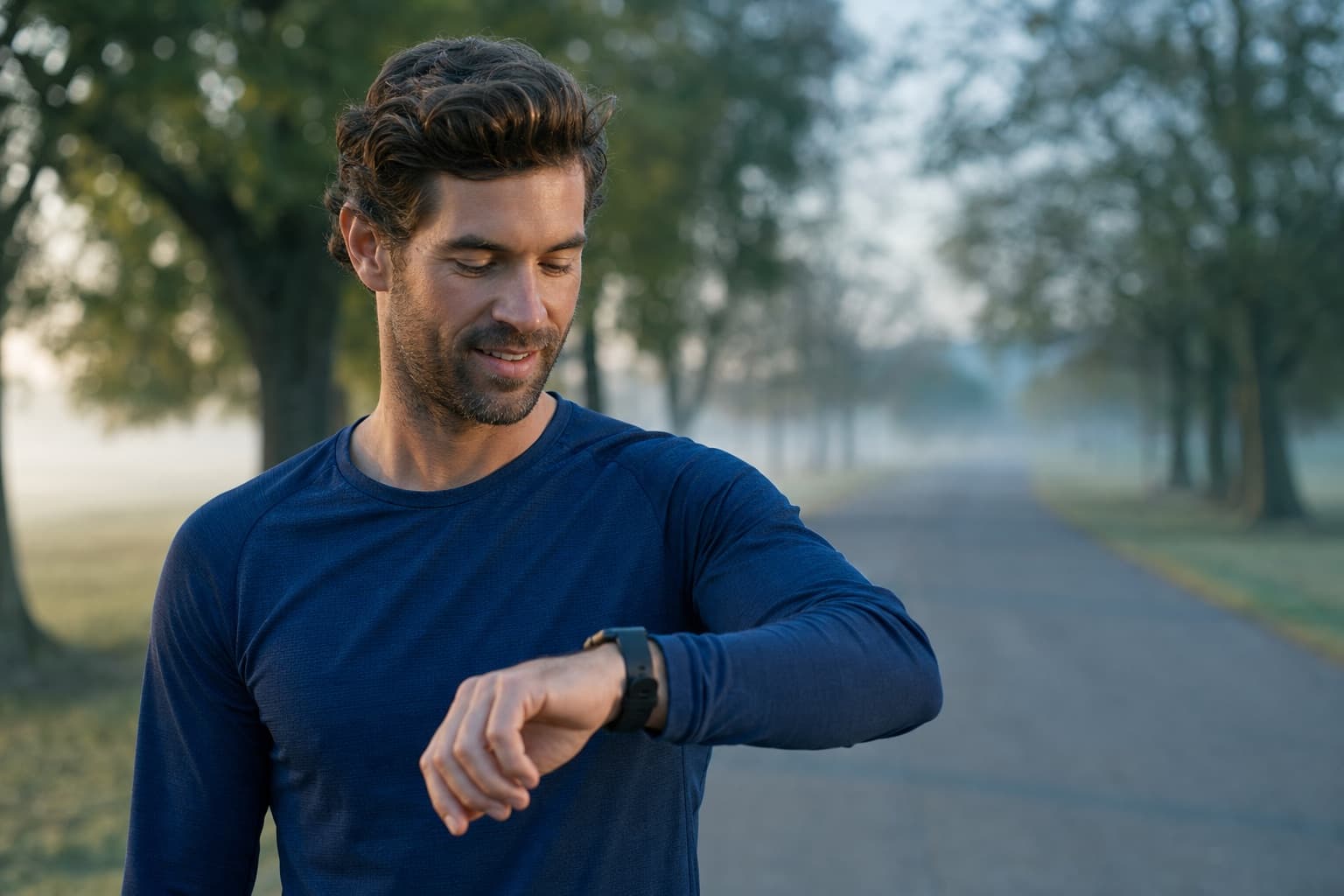
Ojava combines HRV, resting heart rate, sleep, temperature, and training load so the first read is about how to approach the day, not just what happened overnight.

The sample lab panel is not a static report. It feeds marker ranges, biological-age context, longitudinal trends, and clinician-ready questions without turning Ojava into a diagnosis tool.
The demo shows finished calculator outputs, missing-data boundaries, and citations. It helps you understand patterns and prepare better questions, not diagnose, prescribe, or replace licensed care.
The calculations stay close to the story
Expand the sample modules to see the exact readiness, lab, hydration, and trend outputs behind the page. The route stays public, but the math mirrors the signed-in product.
Recovery score, fitness age, training load, and whole-health scorecards.
A wellness recovery read from your own data, not medical advice.
Sources: Task Force of the European Society of Cardiology and the North American Society of Pacing and Electrophysiology 1996, American Academy of Sleep Medicine and Sleep Research Society 2015, Fuller, Colwell, Low, et al. 2020, Mandsager, Harb, Cremer, Phelan, Nissen, and Jaber 2018, Nes, Vatten, Nauman, Janszky, and Wisloff 2014, Gabbett 2016, Buysse 2014, Phillips, Clerx, O'Brien, et al. 2017, Reference Values for Arterial Stiffness' Collaboration 2010, Ben-Shlomo, Spears, Boustred, et al. 2014.
A longevity estimate from your own labs, for understanding trends and talking with your clinician. Not a diagnosis or medical advice.
Educational biological-age estimate only. It is not a diagnosis, lifespan estimate, cancer-screening test, cancer-risk score, treatment target, lab order, or proof that a change caused aging to speed up or slow down.
Based on the AHA Life’s Essential 8 structure: diet, activity, nicotine exposure, sleep, BMI, non-HDL cholesterol, glucose, and blood pressure. Ojava shows the full score only when every source-backed component is present.
82 /100
Inputs: Diet self-report
224 min/week
Inputs: Wearable active minutes
Never exposed
Inputs: Nicotine self-report
7.6 h/night
Inputs: Wearable sleep minutes
23.5 BMI
Inputs: Wearable weight, Wearable height
128 mg/dL non-HDL
Inputs: Total Cholesterol, HDL Cholesterol
90 mg/dL glucose, 5.3 % A1c
Inputs: Glucose, Fasting, Hemoglobin A1c
116/74 mmHg
Inputs: Wearable blood pressure
Marker ranges, category review, and longitudinal charts.
Each marker you have on file, shown against a general reference range.
2 markers of 18 are outside the typical range, worth a look with your clinician.
General reference ranges for context, not a personal target or a diagnosis. What is typical varies by person, lab, and method, so review anything outside the range with your clinician.
What each group of markers generally reflects, what is worth a closer look, and when people commonly recheck.
These markers reflect how your body handles blood sugar and energy over time.
Commonly rechecked every 6 to 12 months. Ask your clinician about the right timing for you.
These markers relate to your cholesterol and overall heart-health picture.
Commonly rechecked every 12 months, or sooner if you're actively changing habits. Ask your clinician about the right timing for you.
These markers reflect general inflammation levels in your body.
Commonly rechecked every 6 to 12 months. Ask your clinician about the right timing for you.
These markers reflect how your thyroid helps regulate your metabolism and energy.
Commonly rechecked every 12 months unless your clinician suggests otherwise. Ask your clinician about the right timing for you.
These markers reflect how your liver is processing and clearing things from your body.
Commonly rechecked every 12 months. Ask your clinician about the right timing for you.
These markers reflect how your kidneys are filtering and balancing your system.
Commonly rechecked every 12 months. Ask your clinician about the right timing for you.
These are your blood-count markers, your red and white cells and related measures.
Commonly rechecked every 12 months as part of a routine panel. Ask your clinician about the right timing for you.
These reflect your vitamin and mineral levels, the building blocks for energy and recovery.
Commonly rechecked every 6 to 12 months, especially if you're supplementing. Ask your clinician about the right timing for you.
General education for context, not a diagnosis or a personal lab order. Review anything worth a look, and the right retest timing, with your clinician.
Each marker you’ve uploaded more than once, plotted over time. Trends and change only, Ojava doesn’t set targets or diagnose. Talk with your clinician about what they mean.
Hydration, weekly summary, and behavior associations.
A simple logged-water progress score against your saved daily target or a broad daily beverage reference. Ojava only scores what you log, and it does not treat this as a medical hydration assessment.
Your logged drinks are on track for the day.
2.7 L logged from 3 entries. Reference: 3 L.
A strong week, more of your key signals moved in a favourable direction than not. Keep the rhythm going.
A weekly digest from your own data, not medical advice.
Habits you log, compared against your recovery markers on the days you did and did not do each one.
On days with a logged workout, sleep averaged 7.9 h vs 7.2 h on other days (+9.8%), a pattern worth keeping. Association in your own data, not causation.
On days with a logged workout, HRV averaged 63 ms vs 58 ms on other days (+8.6%), a pattern worth keeping. Association in your own data, not causation.
On days with a logged workout, resting heart rate averaged 51 bpm vs 54 bpm on other days (-5.6%), a pattern worth keeping. Association in your own data, not causation.
An association in your own data, not causation or medical advice.
Charts built from the same illustrative wearable readings.
Daily averages from your imported wearable data. Trends only, Ojava doesn’t monitor, alert, or diagnose.
Browse 183+ devices and apps
This is a source catalog, not a claim that every provider connects today. File imports are available for supported exports, while signed-app and cloud paths stay clearly gated.
Showing common entries from the 183+ source catalog. The full source map lives in the signed-in workspace and on the integrations page. See integrations.
Ojava connects calculators, trends, and research references so you can understand the pattern before your next step. It explains and prepares. It does not diagnose, prescribe, order labs, or replace licensed care.
Every figure on this page is built from illustrative sample readings, not a real person's record.